
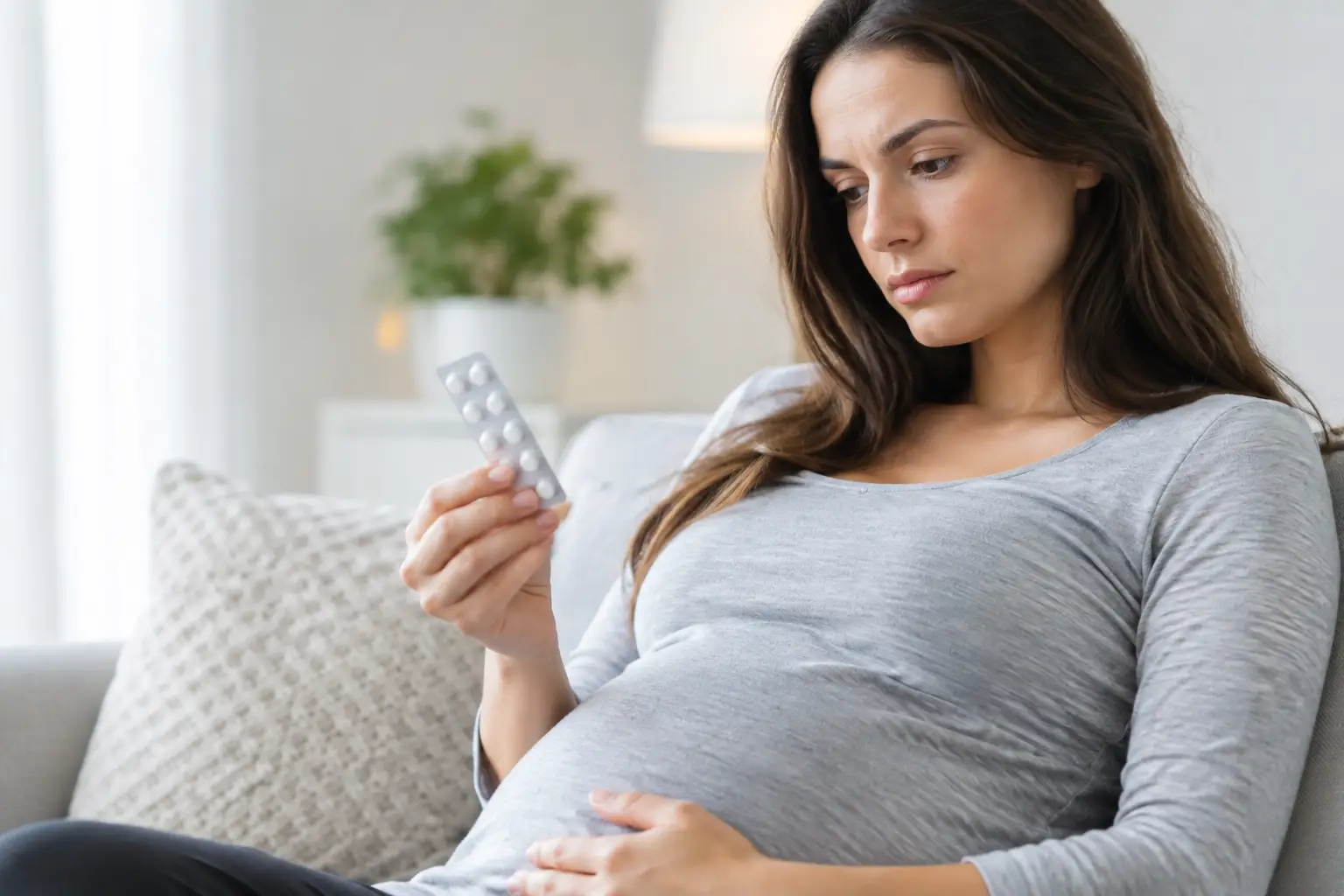

Pregnancy is not the time for guesswork, internet dosing charts, or somebody else’s success story. Ivermectin pregnancy risks deserve a straight answer: human data are limited, animal research raises concerns at higher exposures, and self-treating during pregnancy can create avoidable danger for both mother and baby.
That does not mean every exposure leads to harm. It does mean a positive test, a missed period, or an active attempt to conceive should change the conversation immediately. Clean ingredients and legal access do not make a product automatically appropriate during pregnancy. The question is whether the expected benefit clearly outweighs the potential risk for a specific medical situation.
Why ivermectin and pregnancy require extra caution
Ivermectin is an antiparasitic medicine used for certain human infections. It has a real medical role when a clinician identifies an infection that calls for it. But pregnancy changes how risk is evaluated. A developing fetus is more vulnerable to substances that may have little consequence for a healthy nonpregnant adult.
The central problem is not that researchers have proven ivermectin causes birth defects in people. They have not. The problem is that there is not enough high-quality, controlled human research to confidently rule out fetal risk, especially early in pregnancy when major organs are forming.
Most medical references therefore recommend avoiding ivermectin in pregnancy unless a clinician determines that treatment is necessary and the expected benefit outweighs the uncertainty. That is a cautious standard, not a political statement and not a judgment about personal health choices.
What animal studies suggest about ivermectin pregnancy risks
Animal studies are one reason pregnancy warnings exist. In some animal species, ivermectin exposure at doses high enough to cause maternal toxicity has been associated with developmental problems, including cleft palate and effects on fetal growth.
Animal findings do not translate perfectly to humans. Species process drugs differently, and the doses used in laboratory studies may be much higher than standard human doses. Still, those findings cannot be brushed aside. When human pregnancy data are thin, animal signals carry more weight in safety decisions.
There is another practical issue: product strength, dose, and formulation matter. A capsule intended for human use is not the same as a veterinary product, and veterinary ivermectin should never be used by people. But even a properly labeled human product can be inappropriate during pregnancy if the reason for taking it is unclear or the dose is not medically supervised.
Limited human data are not a green light
Some observational reports have looked at inadvertent ivermectin exposure during pregnancy, often in areas where parasitic disease is common. These reports have not produced a clear, consistent signal of major birth defects. That may sound reassuring, but it is not the same as proving safety.
Observational studies have limits. They may include small numbers of pregnant participants, uncertain timing of exposure, incomplete dose information, and differences in nutrition, infection burden, and access to prenatal care. Rare outcomes can be missed. Early miscarriages may also be difficult to capture accurately.
The honest answer is this: no one can promise that ivermectin is risk-free in pregnancy. At the same time, an accidental exposure is not proof that something will go wrong. Panic is not useful. Prompt, informed follow-up is.
Timing matters, but so does the reason for treatment
The first trimester is generally the period of greatest concern because fetal organs are developing. Exposure later in pregnancy still deserves medical review, but risk assessment may be different depending on the medication amount, the timing, and the underlying health problem.
The reason ivermectin was taken matters just as much. There is a major difference between treatment for a diagnosed parasitic infection and taking a product for general wellness, cleansing, preparedness, or an unverified concern. During pregnancy, vague benefits do not justify uncertain drug exposure.
There are situations where an untreated infection can also threaten maternal or fetal health. A clinician may decide that ivermectin is the better option in a particular case. That decision should be based on the infection, the stage of pregnancy, available alternatives, and the consequences of delaying treatment. It should not be based on a one-size-fits-all rule from social media or a product page.
What to do after ivermectin exposure during pregnancy
If you took ivermectin before realizing you were pregnant, do not take another dose until you have spoken with an obstetric clinician, pharmacist, midwife, or poison control specialist. Gather the facts before the conversation: the product name, strength, number of doses, dates taken, and why you took it.
Do not try to offset the exposure with detoxes, fasting, extra supplements, laxatives, or other home protocols. Those steps can introduce new risks, including dehydration and nutrient problems. There is no proven at-home method to remove a medication from the body faster in a way that improves pregnancy outcomes.
A clinician can help determine whether routine prenatal care is enough or whether additional evaluation makes sense. In many cases, the next step may simply be documentation, reassurance, and appropriate prenatal screening. The right response depends on the details.
Seek urgent care or contact poison control right away if there may have been a large dose, a veterinary product, a concentrated formulation, repeated dosing, or symptoms such as confusion, severe dizziness, fainting, trouble walking, seizures, breathing trouble, or persistent vomiting.
Trying to conceive? Make the plan before the test turns positive
People trying to conceive should treat ivermectin as a medication that requires a pre-pregnancy conversation, not an item to use casually. Ask the clinician who knows your health history whether you need treatment at all, whether another treatment is available, and whether there is a recommended waiting period after a dose before attempting pregnancy.
There is no universal answer that fits every exposure or every health condition. Dose, treatment duration, medical need, fertility timing, and other medications all matter. That may feel less convenient than a blanket rule, but pregnancy safety is not a place for oversimplified certainty.
If you keep health supplies at home, separate what is appropriate for general adult use from what is appropriate during pregnancy. Labeling and storage matter. So does making sure a partner does not assume that a product safe for them is safe for a pregnant person.
Questions worth asking a clinician
Bring direct questions. Was the exposure likely to be clinically significant? Does the timing change the concern? Is there a safer treatment for the condition being addressed? Are there symptoms or warning signs that should trigger urgent evaluation? What prenatal monitoring is appropriate now?
Also be clear about every product taken, including supplements, herbs, topical treatments, and over-the-counter medicines. Pregnancy risk is not always about one product alone. Drug interactions, duplicate ingredients, dehydration, liver disease, and underlying infections can change the picture.
A practical standard for pregnancy decisions
Independence in healthcare should include knowing when the facts call for backup. Pregnancy is a short window with high stakes, and uncertainty is a reason to get individualized medical guidance, not a reason to gamble.
If ivermectin exposure has already happened, write down the details and make the call today. If pregnancy is possible, pause before the next dose. Clear information and timely prenatal support are far more useful than fear, shame, or false reassurance.