
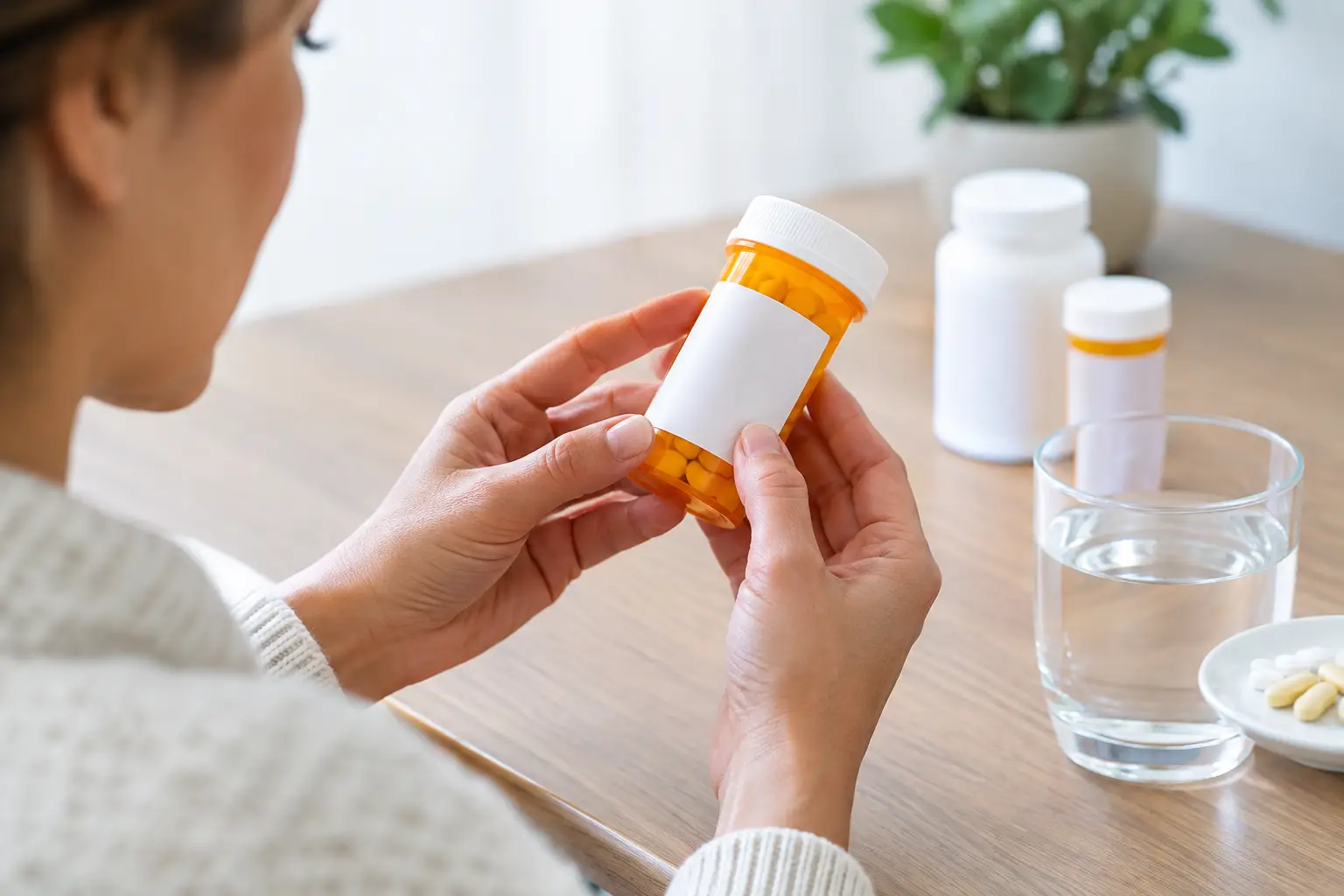

A medicine label is not decoration, fine print, or a suggestion. It is the rulebook for what is in the package, who should use it, how much to take, and when to stop. This guide to medication label literacy helps you read that rulebook without guesswork – because being self-directed starts with knowing exactly what you are putting in your body.
The plain truth: a familiar product name does not tell you enough. Two products can look different, come in different package sizes, or make different promises while containing the same active ingredient. That is how people accidentally double up, take more than the label allows, or miss a warning that mattered.
Start With the Active Ingredient
The active ingredient is the substance meant to produce the medication’s effect. It is the first thing to find, whether you are reading an over-the-counter Drug Facts panel, a prescription bottle, or a package insert.
Brand names are marketing. Active ingredients are facts. If two products both contain acetaminophen, for example, taking them together may raise the total amount you take even if one is sold for pain and the other is sold for cold symptoms. The same issue comes up with antihistamines, decongestants, sleep aids, anti-inflammatory drugs, and cough medicines.
Read the ingredient name, its strength, and the form. A label may state milligrams per tablet, milliliters, capsule, packet, or measured dose. “500 mg” means very little until you know whether that amount applies to one tablet, two tablets, or a full serving.
Do not assume a capsule, tablet, liquid, cream, or topical solution can be used interchangeably. The route matters. A product labeled for use on skin is not an oral product. A medicine formulated for animals is not a substitute for a human-use medicine. Keep it simple: use products only as labeled for people, the stated route, and the stated purpose.
A Guide to Medication Label Literacy: Read the Directions Word for Word
The directions section tells you more than how often to take a product. It sets boundaries. Look for the recommended dose, time between doses, maximum amount in 24 hours, age limits, and how long the product should be used before you seek professional advice.
“Take as needed” does not mean take as much as you want. “Do not exceed” is a hard stop. More is not automatically stronger, faster, or better. With many medications, exceeding the labeled amount raises the risk of side effects without improving the intended result.
Pay close attention to the measuring instructions for liquids. A kitchen spoon is not a dosing device. Use the cup, syringe, or marked dropper supplied with the product, and confirm whether the measurement is in milliliters or teaspoons. For children, dosing should be based on the label and the child’s age or weight when specified. If anything is unclear, ask a pharmacist before giving a dose.
Some labels direct users to take a product with food, plenty of water, or at a particular time of day. Those instructions can affect absorption, stomach irritation, sleep, or the way the medicine works. They are not filler text.
Warnings Are the Part You Cannot Skip
Warnings are where a label gets specific about risk. Read them before the first dose, not after a problem starts. A warning may tell you not to use a product if you have a certain condition, are pregnant or breastfeeding, take another medication, have an allergy, or are under a listed age.
Look for language such as “ask a doctor before use,” “ask a pharmacist,” “do not use,” and “stop use and seek medical help.” These phrases do not all mean the same thing. “Do not use” means the product is not appropriate in that situation. “Ask” means there may be a safe path, but it depends on your medications, history, and circumstances.
Be especially careful when combining medications with alcohol, sedatives, sleep products, antihistamines, opioids, blood thinners, blood pressure medicines, diabetes medicines, or products that affect serotonin. Interactions are not always obvious from the product name.
Call emergency services right away for signs of a serious allergic reaction, such as trouble breathing, swelling of the face or throat, widespread hives, fainting, or severe dizziness. For a suspected overdose, contact Poison Control immediately in the United States at 1-800-222-1222. Do not wait for symptoms to get worse.
Separate Active Ingredients From Inactive Ingredients
Inactive ingredients can still matter. They may include capsule materials, dyes, sweeteners, preservatives, oils, flavorings, or binding agents. If you have a known allergy or sensitivity, the inactive ingredient section is worth reading every time, even when you have used a similar product before.
This is also where “no fillers” claims need a reality check. Every capsule, tablet, or liquid requires a formulation. The relevant question is not whether a product sounds clean. The relevant questions are what it contains, why it contains it, and whether it is suitable for you.
If a package uses broad wellness language but does not plainly identify the active ingredient, strength, directions, warnings, manufacturer, and lot information, treat that as a reason to pause. A supplement label and a medication label are not the same thing. Supplements do not go through the same premarket approval process as prescription drugs, and wording like “supports” or “promotes” is not proof that a product treats a disease.
Know What an Expiration Date Does – and Does Not – Tell You
An expiration date is the manufacturer’s date for guaranteed potency and quality when the product has been stored as directed. It is not a challenge to test your luck. Heat, moisture, sunlight, and poor storage can damage products before that date.
Store medication in the conditions listed on the package. A hot car, humid bathroom, or sunny windowsill is often the wrong place. Keep products in their original container whenever possible so the directions, lot number, expiration date, and safety information stay with the medication.
Do not use a product that has changed color, odor, texture, or appearance, even if it is not expired. Do not take unlabeled pills from a loose container. And do not use medication from a damaged package, broken seal, or bottle that appears tampered with.
The lot number matters if there is a quality issue or recall. It is a practical detail, not clutter. Keep the package until the product is finished.
Prescription Labels Need the Same Attention
A prescription label contains its own critical details: the patient’s name, medication name, strength, instructions, prescriber, pharmacy, refill status, and sometimes a description of the pill. Check the patient name before taking anything, especially in households where more than one person uses medication.
Prescription directions can include abbreviations or pharmacy shorthand. If the label does not make complete sense, do not guess. Ask the pharmacist to explain it in plain English. That is part of the service, and it can prevent a costly mistake.
The same goes for medicines that may be available without a prescription in some settings. Easier access does not erase the label’s limits. A product’s permitted use, dose, age restrictions, warnings, and interaction risks still apply. For ivermectin or any other medication, use only a human product labeled for the specific purpose you are addressing, and do not treat internet claims as a substitute for the package directions or individualized medical advice.
Build a Simple Label-Reading Habit
Before taking a new medication, stop for one minute and check five things: active ingredient, strength, directions, warnings, and expiration date. If you already take other medications, compare active ingredients and ask a pharmacist about interactions before adding another product.
Keep a current written list of every medication, supplement, and over-the-counter product you use. Include the dose and how often you take it. Bring that list to appointments and have it ready if you need urgent care. It gives a pharmacist or clinician the information they need to spot duplication and interaction problems quickly.
Being informed does not mean taking unnecessary risks. It means reading the label carefully, respecting the limits printed on it, and asking direct questions when the answer is not clear. That is real independence: fewer assumptions, fewer surprises, and more control over the decisions you make for yourself and your household.