
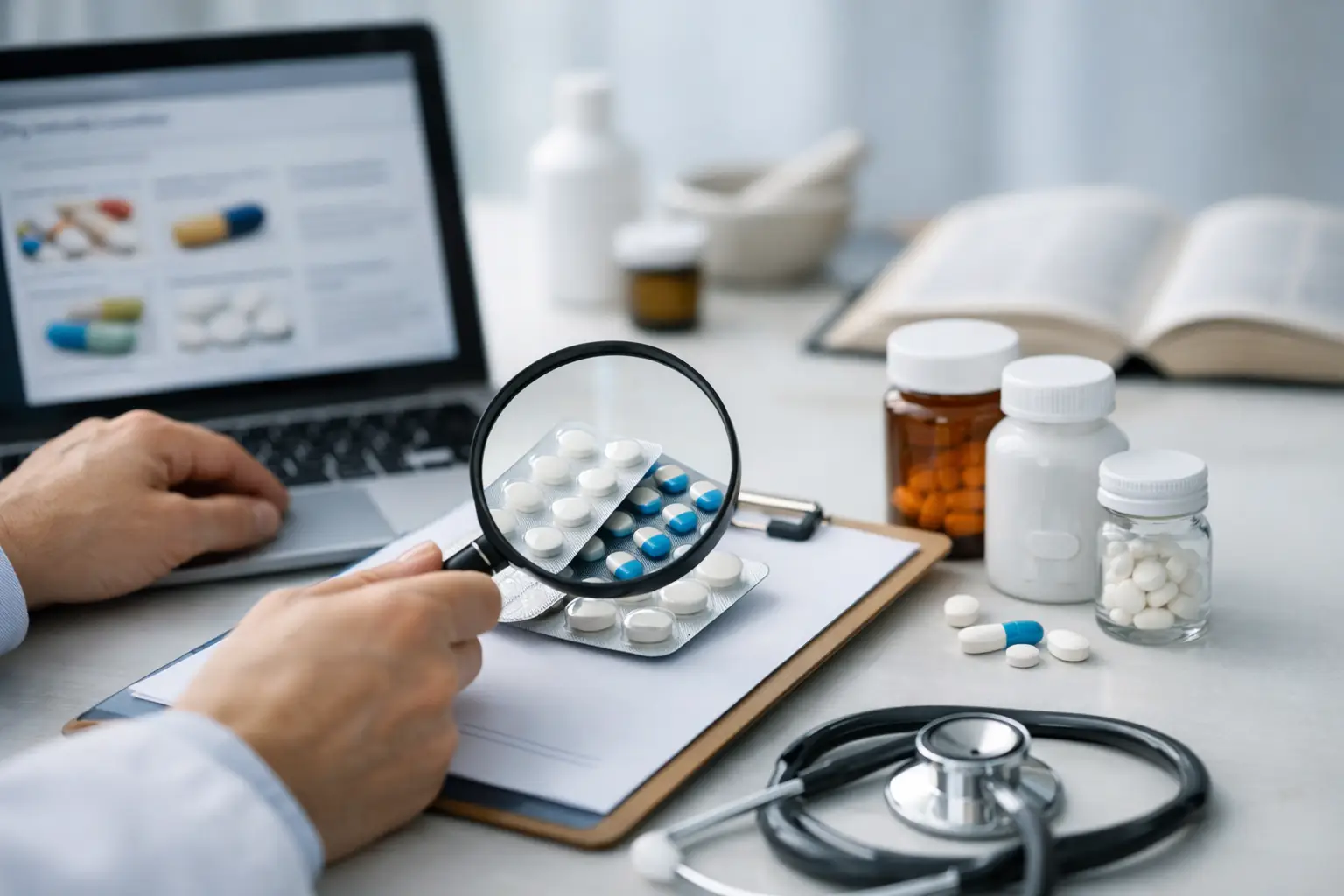

A professional-looking bottle, a confident video, and a long list of testimonials can make almost any drug sound like a sure thing. That is exactly why knowing how to find reliable drug information matters. Your health is too personal to hand over to a viral post, a fear-based headline, or a seller that refuses to show its work.
Being self-directed does not mean being careless. It means asking better questions, checking the source, and knowing where marketing ends and evidence begins. No filler. No fluff. Just a practical way to sort useful information from noise before you put anything in your body.
How to Find Reliable Drug Information: Start With the Label
The official drug label is one of the most useful places to begin. It is not exciting, and it will not read like an ad. That is the point.
For prescription and over-the-counter medicines, the label tells you what the product contains, what it is approved or intended to treat, how it is used, who should avoid it, potential side effects, interaction warnings, and what to do in an overdose. If a claim made online does not match the product label, do not brush off the difference. Find out why.
Look for the active ingredient first. Brand names can be confusing, and different products can contain the same drug under different packaging. The active ingredient is what lets you compare products, identify duplicates, and check whether you may already be taking something similar.
Dosage strength matters just as much. A product containing the same ingredient is not automatically interchangeable with another product. Formulation, route of use, concentration, and intended use can change the safety picture. A tablet, cream, injectable product, and animal formulation are not interchangeable simply because they share a name or ingredient.
Know Which Sources Earn Trust
Reliable drug information is usually specific, traceable, and willing to discuss limits. It names the drug, the dose studied, the population studied, the outcome measured, and the risks observed. Weak information makes sweeping promises while staying vague about the details.
For most people, the best starting points are official drug labels and safety communications from the Food and Drug Administration, medication guides, and information from a licensed pharmacist or clinician who can consider your full medication list. Government health agencies and major medical organizations can also be useful when they cite the underlying evidence rather than simply repeating a headline.
Research databases and peer-reviewed medical journals can offer more detail, but they require careful reading. One small study does not settle a question. A laboratory study is not the same as a study in people. An observational study can show an association without proving that a drug caused the result.
A good source should make it possible to trace a claim back to evidence. If you cannot identify who wrote it, what they are relying on, or when it was updated, treat it as opinion, not medical fact.
Separate a Drug’s Uses From Its Hype
A drug can be useful for one condition and unproven, ineffective, or unsafe for another. That is not a contradiction. It is how medicine works.
When you read about a medication, ask one plain question: useful for what, exactly? Then ask whether the claim is based on approved labeling, clinical guidelines, well-conducted human research, or personal stories. These are not equal forms of evidence.
Testimonials can be sincere. They can also be incomplete. People may improve because their condition was already resolving, because they changed several things at once, because the original diagnosis was wrong, or because the benefit they expected shaped what they noticed. A personal experience may be worth discussing, but it cannot tell you whether a drug will work for everyone or whether the risks are acceptable.
Be especially cautious with words such as “cure,” “guaranteed,” “works for everyone,” “hidden by doctors,” or “zero side effects.” Real drug information includes trade-offs. Every medication has a context, and even familiar products can create problems when the dose, timing, health condition, or combination is wrong.
Check the Evidence, Not Just the Conclusion
You do not need a medical degree to ask smart questions about a study. Start by looking at who was studied. Were the participants adults, children, healthy volunteers, or people with a specific diagnosis? Was the study large enough to be meaningful? Did it compare the drug against a placebo or standard treatment?
Next, look at the outcome. Did researchers measure something patients can actually feel or live with, such as fewer hospitalizations, better symptom control, or longer survival? Or did they measure a lab value that may or may not translate into a real-world benefit?
Also check the date. Drug guidance changes when stronger evidence appears, new side effects are identified, or recommendations are revised. An article from several years ago may be accurate in its original context and still be outdated for a decision you are making now.
Funding deserves a look, too. Industry funding does not automatically make research false, and an anti-industry source is not automatically honest. The question is whether the study design, reporting, and outside review support the conclusion. Independence is valuable, but skepticism should apply in every direction.
Watch for These Common Red Flags
Some signs should make you slow down before accepting a drug claim:
- The source promises a dramatic result but offers no exact dose, study, or safety information.
- It says a product treats a wide range of unrelated diseases with equal certainty.
- It relies entirely on screenshots, testimonials, influencers, or anonymous “experts.”
- It tells you not to discuss the product with a pharmacist or clinician.
- It dismisses all safety warnings as propaganda while offering none of its own.
- It sells urgency first: buy now, stock up now, ask questions later.
None of these red flags proves every statement is false. Together, though, they are a reason to pause. Good information can stand up to questions. It does not need to pressure you into a rushed decision.
Use a Pharmacist as a Practical Second Opinion
For questions about interactions, duplicate ingredients, dosing instructions, side effects, or how to take a medicine, pharmacists are often one of the fastest and most practical sources of help. Their job is not to shame you for asking. Their job is to help prevent avoidable mistakes.
Bring the full picture. That includes prescriptions, over-the-counter drugs, supplements, herbal products, vitamins, nicotine products, alcohol use, and any conditions such as liver disease, kidney disease, heart rhythm problems, pregnancy, or breastfeeding. What looks harmless by itself can become risky in combination.
This matters when you are comparing sources online. A website may accurately describe a drug in general while missing the one factor that changes the answer for you. Reliable information is not just about finding a credible page. It is about applying credible facts to a real person with a real health history.
Be Extra Careful With Products Bought Online
Online access can be convenient, but convenience does not replace verification. Before purchasing any drug product, confirm the active ingredient, strength, dosage form, manufacturer or distributor, lot information, expiration date, and storage instructions. Packaging alone is not proof that a product is legitimate or appropriate for you.
Avoid products marketed for animals when considering human use. Animal products may have different concentrations, inactive ingredients, quality controls, and dosing directions. Do not guess at a dose by cutting, measuring, or converting products intended for a different species or route of administration.
Be cautious with any seller that hides its location, makes medical claims that sound too broad to be true, or provides no clear safety information. A legitimate business should be able to identify the product clearly and should not encourage customers to ignore warnings, interactions, or adverse effects.
Make a Simple Decision Record
When a drug decision feels complicated, write down the claim, the source, the active ingredient, the intended use, the known risks, and the unanswered questions. This takes five minutes and makes it harder for emotion or urgency to take over.
Then ask yourself whether you have enough information to act. If the answer is no, wait. There is nothing weak about getting another opinion before taking a medication, combining products, or changing a dose. The strongest kind of independence is informed independence.
If someone has severe symptoms, a suspected overdose, trouble breathing, fainting, swelling of the face or throat, seizures, chest pain, or a dangerous reaction after taking a drug, seek urgent medical help. For possible poisonings or medication errors in the United States, Poison Control can provide immediate guidance by phone.
You do not have to accept every headline, every sales pitch, or every institutional talking point without question. Ask for the label. Ask for the evidence. Ask what the risks are. The more clearly a source can answer, the more useful it is likely to be when your health is on the line.