
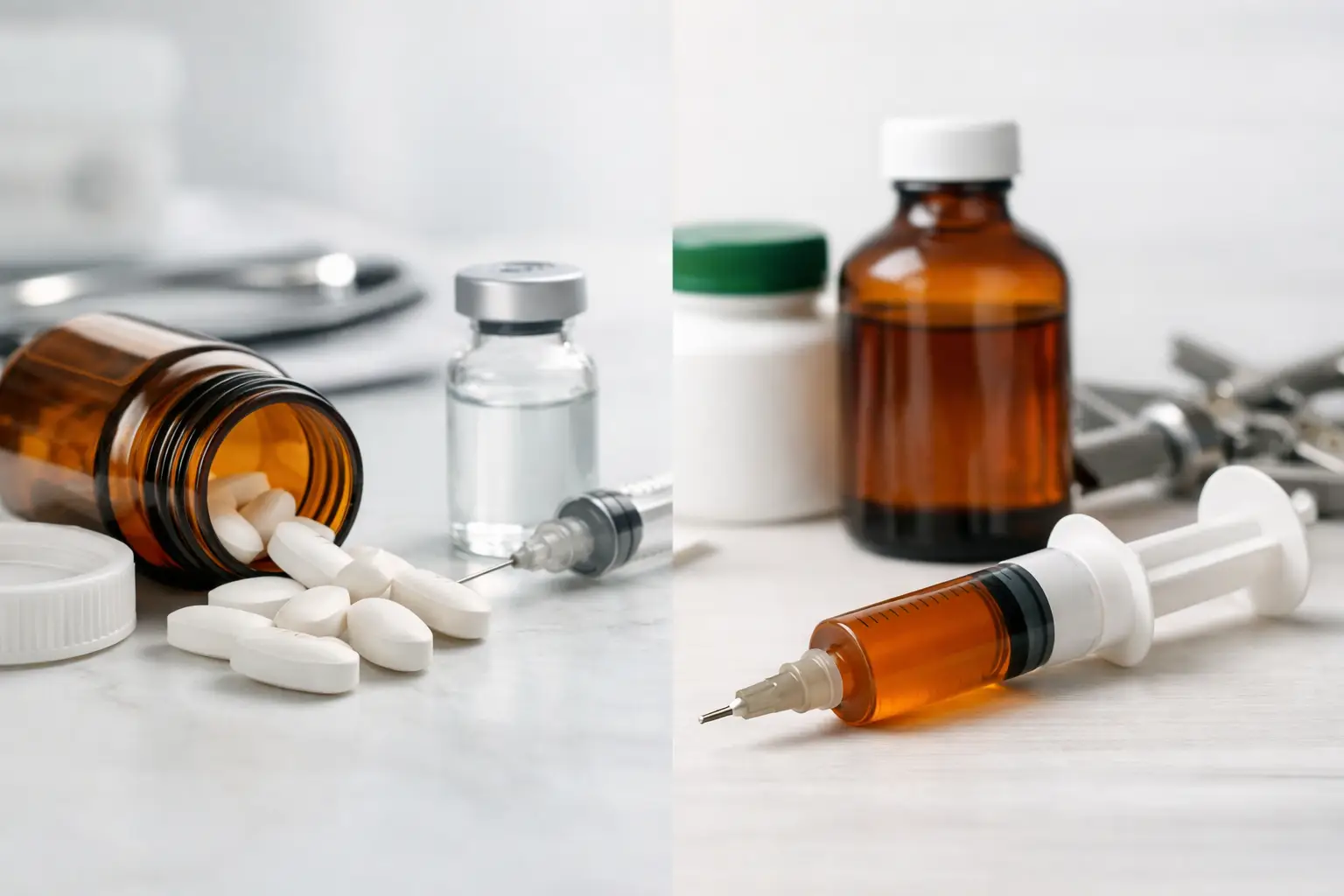

A tube of horse paste can look like a shortcut. It is not. The real issue in the human grade vs animal ivermectin conversation is not whether the active ingredient has the same name. It is whether the product was made, labeled, dosed, and quality-controlled for a human body.
That distinction matters when the dose is measured in tiny amounts, when products are concentrated for large animals, and when the label was never designed to guide human use. Straight talk: animal medicine belongs to animals. If you are considering ivermectin for yourself, use a product intended for people and make decisions with a qualified health professional who knows your medications, health history, and reason for taking it.
Human Grade vs Animal Ivermectin: The Core Difference
Ivermectin is an antiparasitic medication used in both human and veterinary medicine. It has legitimate, well-established uses in people for certain parasitic infections and is also widely used in animals for species-specific parasite control. The name of the active ingredient may be the same, but that does not make every package interchangeable.
Products intended for human use are manufactured and labeled for people. Their dosage forms, concentrations, quality standards, inactive ingredients, instructions, and safety information are designed around human administration. In the United States, human ivermectin products are generally available only by prescription unless a state law or a specific product category provides another lawful pathway. Availability rules can change, so do not confuse a marketing claim, a social-media post, or an old headline with current medical and legal guidance.
Animal ivermectin products are made for livestock, horses, dogs, cats, or other species. A cattle drench, equine paste, injectable livestock solution, and dog heartworm preventive are not simply human products in different packaging. They may have very different concentrations and directions. Some are formulated for oral use in an animal; others are intended for topical use or injection under veterinary direction.
Concentration Makes Guesswork Dangerous
The biggest practical risk is concentration. A person looking at a syringe of horse paste may see a familiar ingredient and assume the math is simple. It often is not.
Veterinary products may deliver amounts calibrated by animal body weight, with measuring marks that correspond to hundreds or even more than a thousand pounds. The vehicle and instructions are built around a particular animal and use case. Trying to convert those markings into a human dose leaves too much room for error.
More ivermectin is not better ivermectin. Taking excessive amounts can cause nausea, vomiting, diarrhea, dizziness, low blood pressure, sleepiness, confusion, tremors, seizures, loss of coordination, and other serious neurologic effects. The risk rises further when a product is mismeasured, combined with alcohol or sedating medications, or used by someone with a medical condition that changes how drugs are processed.
Human dosing is not a wellness slogan or a one-size-fits-all protocol. It depends on why ivermectin is being considered, body weight when relevant, age, liver function, pregnancy status, and other medications. A clinician or pharmacist can identify whether ivermectin is appropriate at all, not just calculate a number.
Formulation Is More Than an Inactive Detail
When people say they want a clean product, that is a reasonable question to ask. But “clean” should mean traceable manufacturing, clear labeling, proper storage, and a formulation designed for its stated use. It should not be used as a shortcut around basic safety.
A veterinary paste may include flavoring agents, thickening ingredients, solvents, or other excipients chosen to make it workable and palatable for animals. A pour-on product may be intended for skin application in cattle, not swallowing. An injectable veterinary formulation may require administration methods that should never be improvised at home.
Even when inactive ingredients do not create the primary risk, the wrong formulation can make the intended dose difficult to measure or absorb predictably. That is exactly why labels matter. A package label is not decoration. It tells you what species the product was designed for, how it should be used, what concentration it contains, and what warnings apply.
The Label Tells You Who the Product Is For
Human-use products should identify their intended patient population and provide instructions written for human administration. Veterinary labels will identify the animal species, weight range, route of administration, withdrawal periods for food animals, and other veterinary-specific directions.
A warning such as “for animal use only” is not bureaucratic fluff. It is a hard stop. Do not treat it as a challenge to work around.
Be especially cautious with products sold in vague packaging or through sellers that cannot clearly state the manufacturer, lot number, expiration date, dosage form, and intended use. If a seller uses pressure, makes sweeping disease claims, or insists that professional guidance is unnecessary, that is a reason to step back. Independence means asking better questions, not accepting less information.
What Ivermectin Can and Cannot Do
Ivermectin has a place in medicine, but it is not a general “detox” product or a cure-all. Evidence supports its use for certain parasitic infections when prescribed or recommended for the correct condition. That does not automatically support using it for fatigue, vague digestive symptoms, “internal cleansing,” prevention of unrelated illness, or viral infections.
A medicine can be historically useful and still be the wrong tool for a particular problem. If symptoms may point to a parasite, testing and clinical evaluation can help determine whether that is actually the issue. Treating the wrong condition may delay care for something else, including infections or gastrointestinal problems that need a different approach.
The same principle applies to claims about viruses. Major U.S. health authorities do not recommend ivermectin for preventing or treating COVID-19 outside clinical trials. That position is based on the totality of available evidence, not on who is selling the product or how loudly the argument is made.
Medication Interactions and Personal Risk Factors
Ivermectin is not a casual supplement. It can interact with other medicines, including drugs that affect the central nervous system or blood-thinning medications. Individual risk can also change with liver disease, neurologic conditions, pregnancy, breastfeeding, and a history of medication sensitivity.
That does not mean adults should be talked down to or denied clear information. It means clear information has to include the parts that are inconvenient. A pharmacist is often a practical first call for questions about interactions, product labels, and what to do if you accidentally used the wrong product.
If someone has taken animal ivermectin or more ivermectin than directed and develops confusion, severe dizziness, tremors, vision changes, trouble walking, seizures, or persistent vomiting, get urgent medical help. In the United States, Poison Control can also provide immediate guidance at 1-800-222-1222.
A Better Standard for Self-Directed Health Decisions
People want options. They want products they can understand, labels they can read, and less runaround when they are trying to care for themselves and their families. Those are fair expectations.
But self-direction works best when it is grounded in facts. Choose products made for humans, verify the source and labeling, follow legitimate dosing instructions, and get individualized advice when medication safety is involved. Keep animal products in the barn, kennel, or tack room where they belong.
The strongest health decision is not the one that feels most rebellious. It is the one that gives you the clearest line between a useful medicine and an avoidable risk.